France, mid-19th century
This beautiful pair of gilt and patinated bronze two-light candelabras represents the fine metalwork of the Delafontaine dynasty—one of the most distinguished foundry families in 18th–19th century Paris. Each piece is signed “A. D” for Auguste-Maximilien Delafontaine, heir to the celebrated bronzier Jean-Baptiste Maximilian Delafontaine (circa 1764–1820). Auguste carried forward the family’s reputation for producing superb gilt bronze objects for France’s elite ateliers, including collaborations with Charles Percier, Pierre-François-Léonard Fontaine, and other leading decorative artists of the Empire and Restoration periods.
Note: repair to one of the crane feet has been noted and as seen in the pictures.
Design & Artistic Details
Striking Figural Composition
Each candelabra is surmounted by a beautifully rendered crane in dark patinated bronze, depicted mid-stride with raised wings. The bird’s leg coils elegantly around a gilt serpent-form support, terminating in a finely cast tortoise platform—an unusual trio of symbolic creatures referencing longevity, vigilance, and wisdom in classical decorative arts.
Empire-Style Medallion Plate
The broad circular drip pan below the bird’s perch is richly decorated with:
Five inset silvered medallions featuring classical profile busts, mythological animals, and heroic scenes
A continuous Greek-key border with floral embellishments
Finely chased surface textures and crisp edge detailing
These medallions evoke ancient coins and intaglios—motifs frequently revived in early 19th-century Empire bronzes.
Two Gilt Bronze Candle Arms
Each arm extends from a central junction decorated with stylized dolphin heads and a radiating sunburst medallion.
The candle cups are encircled with applied zig-zag ornament, alternating between gilt and darkened bronze, creating powerful contrast.
The casting quality is exceptionally sharp, and the original mercury gilding remains luminous and intact.
Architectural Bases
The bases feature:
This combination of classical ornament and sculptural detailing is characteristic of Delafontaine’s mature work.
Casting Quality & Condition
The candelabras display:
Superior chisel work across all surfaces
High-relief modeling on the cranes, tortoises, and dolphins
Original mercury gilding with a rich, warm tone
Beautiful contrast between patinated bronze and ormolu highlights
They present exceptionally well, with expected minor age wear consistent with 19th-century gilt bronze.
Artist Background: Auguste-Maximilien Delafontaine
Auguste-Maximilien Delafontaine (1813–1892) was the final master bronzier of the Delafontaine line, a family whose Parisian workshop operated from the late 18th century and produced ormolu for royal residences, the Imperial court, and the leading ébénistes and decorative arts workshops of the period. Auguste exhibited regularly at the Paris Salons, where his bronzes were praised for their technical refinement, classical subject matter, and architectural balance.
Delafontaine pieces are held in major public collections, including:
Signed examples of his sculptural bronzework are increasingly rare on the market.
Dimensions: 13”H x 8”W x 5”D
France, mid-19th century
This beautiful pair of gilt and patinated bronze two-light candelabras represents the fine metalwork of the Delafontaine dynasty—one of the most distinguished foundry families in 18th–19th century Paris. Each piece is signed “A. D” for Auguste-Maximilien Delafontaine, heir to the celebrated bronzier Jean-Baptiste Maximilian Delafontaine (circa 1764–1820). Auguste carried forward the family’s reputation for producing superb gilt bronze objects for France’s elite ateliers, including collaborations with Charles Percier, Pierre-François-Léonard Fontaine, and other leading decorative artists of the Empire and Restoration periods.
Note: repair to one of the crane feet has been noted and as seen in the pictures.
Design & Artistic Details
Striking Figural Composition
Each candelabra is surmounted by a beautifully rendered crane in dark patinated bronze, depicted mid-stride with raised wings. The bird’s leg coils elegantly around a gilt serpent-form support, terminating in a finely cast tortoise platform—an unusual trio of symbolic creatures referencing longevity, vigilance, and wisdom in classical decorative arts.
Empire-Style Medallion Plate
The broad circular drip pan below the bird’s perch is richly decorated with:
Five inset silvered medallions featuring classical profile busts, mythological animals, and heroic scenes
A continuous Greek-key border with floral embellishments
Finely chased surface textures and crisp edge detailing
These medallions evoke ancient coins and intaglios—motifs frequently revived in early 19th-century Empire bronzes.
Two Gilt Bronze Candle Arms
Each arm extends from a central junction decorated with stylized dolphin heads and a radiating sunburst medallion.
The candle cups are encircled with applied zig-zag ornament, alternating between gilt and darkened bronze, creating powerful contrast.
The casting quality is exceptionally sharp, and the original mercury gilding remains luminous and intact.
Architectural Bases
The bases feature:
This combination of classical ornament and sculptural detailing is characteristic of Delafontaine’s mature work.
Casting Quality & Condition
The candelabras display:
Superior chisel work across all surfaces
High-relief modeling on the cranes, tortoises, and dolphins
Original mercury gilding with a rich, warm tone
Beautiful contrast between patinated bronze and ormolu highlights
They present exceptionally well, with expected minor age wear consistent with 19th-century gilt bronze.
Artist Background: Auguste-Maximilien Delafontaine
Auguste-Maximilien Delafontaine (1813–1892) was the final master bronzier of the Delafontaine line, a family whose Parisian workshop operated from the late 18th century and produced ormolu for royal residences, the Imperial court, and the leading ébénistes and decorative arts workshops of the period. Auguste exhibited regularly at the Paris Salons, where his bronzes were praised for their technical refinement, classical subject matter, and architectural balance.
Delafontaine pieces are held in major public collections, including:
Signed examples of his sculptural bronzework are increasingly rare on the market.
Dimensions: 13”H x 8”W x 5”D


 Image 1 of 18
 Image 2 of 18
 Image 3 of 18
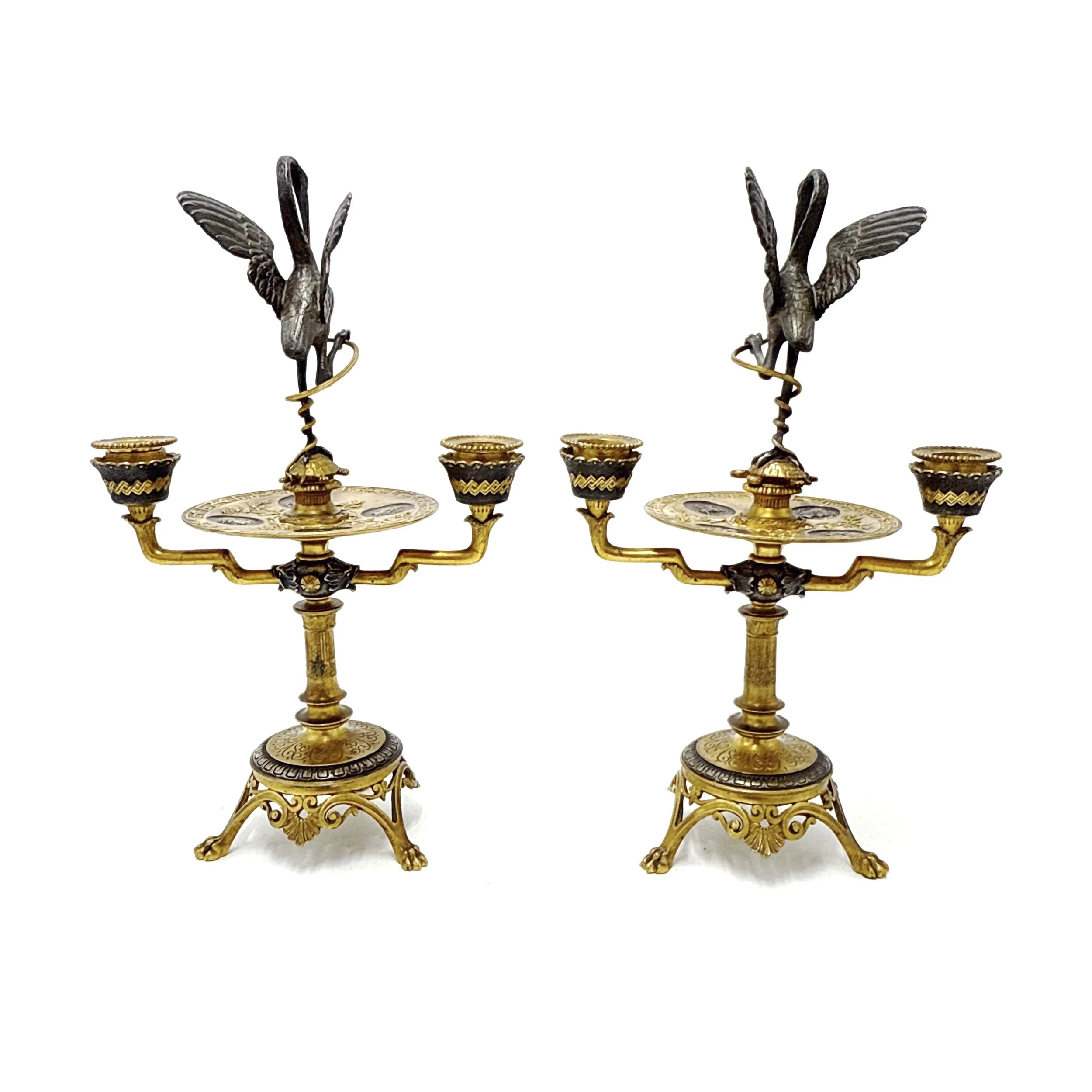 Image 4 of 18
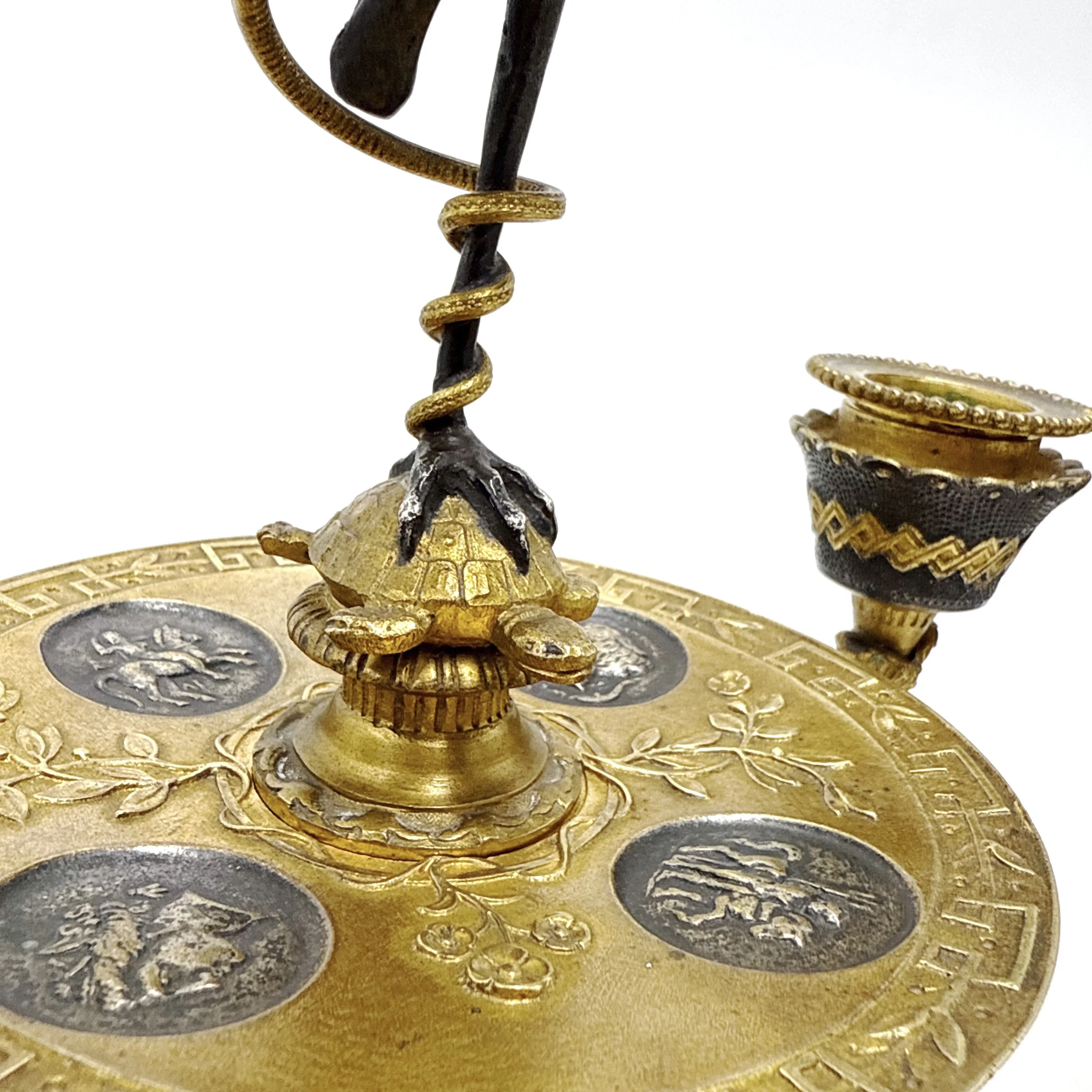 Image 5 of 18
 Image 6 of 18
 Image 7 of 18
 Image 8 of 18
 Image 9 of 18
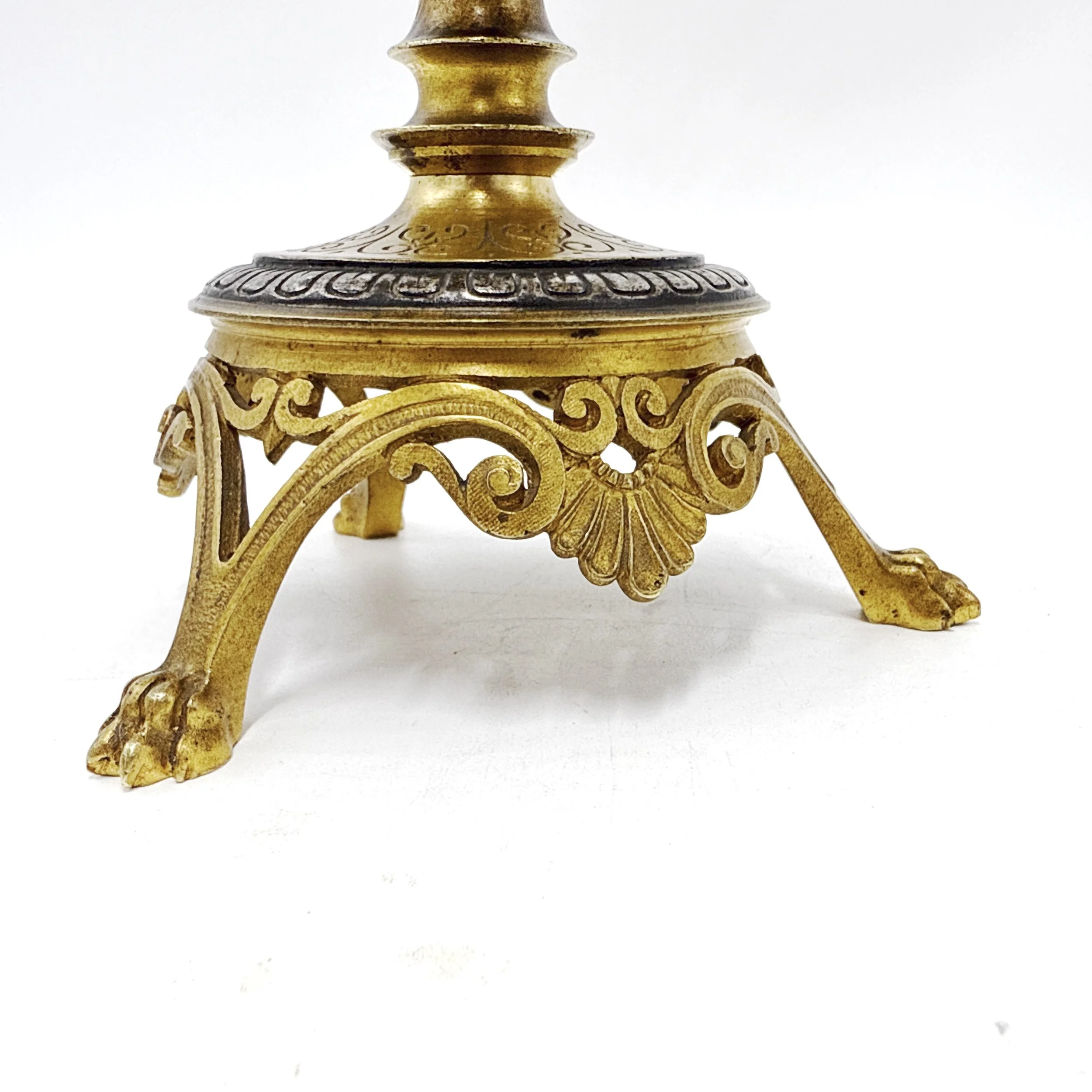 Image 10 of 18
 Image 11 of 18
 Image 12 of 18
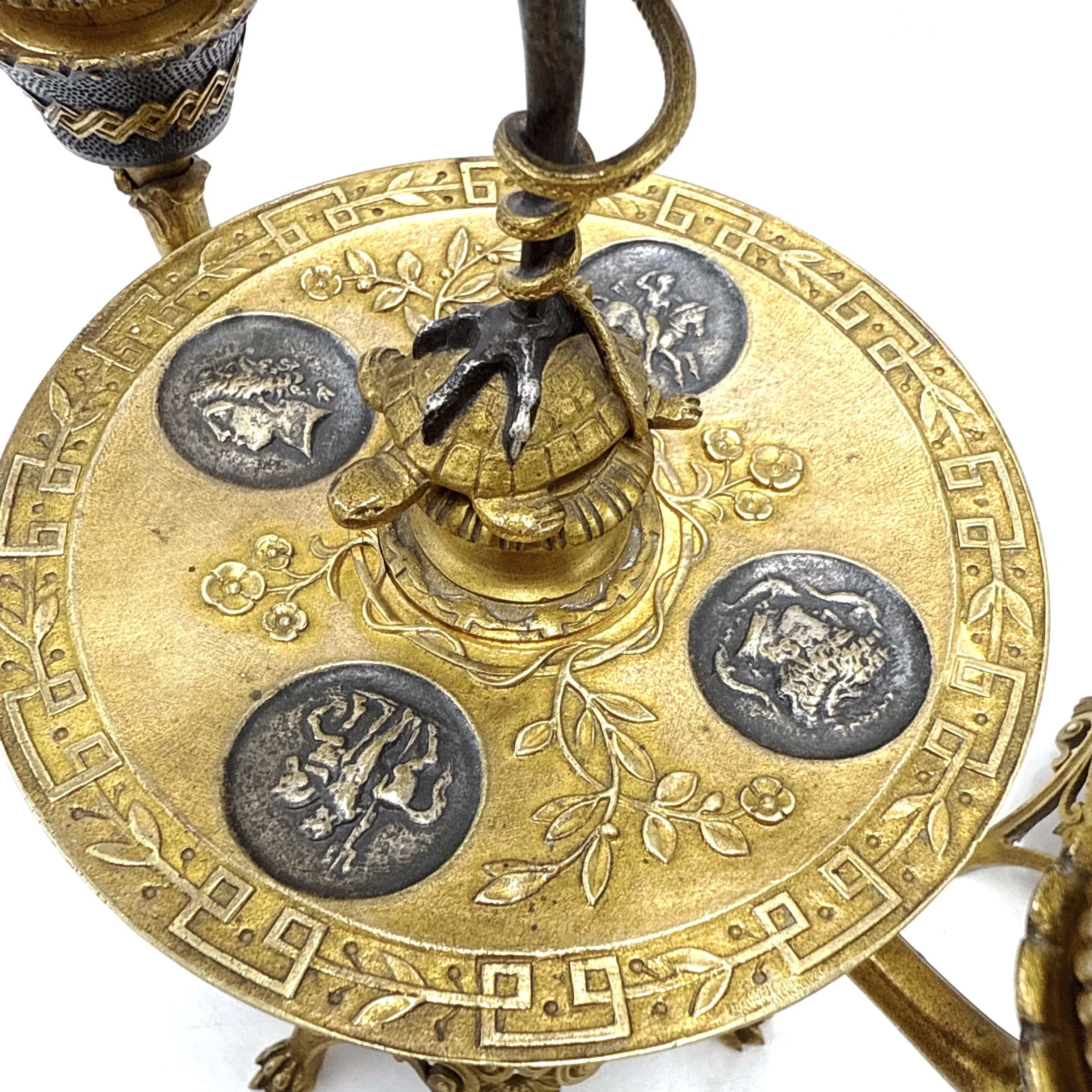 Image 13 of 18
 Image 14 of 18
 Image 15 of 18
 Image 17 of 18
 Image 18 of 18