An exceptional and highly decorative pair of French Empire period four-light candelabra, dating to approximately 1815, executed in richly contrasting gilt bronze and dark patinated bronze and centered upon beautifully modeled winged figures of Victoria, the Roman goddess of Victory.
Monumental in scale at approximately 30 inches high, this impressive matched pair embodies the archaeological classicism, imperial symbolism and superb bronzework that defined the finest French decorative arts of the Napoleonic and early Restoration periods.
Each candelabrum is conceived as an elegant winged female figure of Victoria, modeled in dark patinated bronze and standing delicately upon a gilded spherical orb. The figures are depicted in classical drapery, their large feathered wings falling behind the body while both arms are raised overhead to support an elaborate gilt-bronze capital from which the candle branches emerge.
Above each figure rises an ornate arrangement of four lights, incorporating scrolling gilt-bronze branches ornamented with classical foliate and floral motifs. The beautifully chased arms terminate in finely detailed candle cups and broad drip pans, while the elevated central stem culminates in a sculptural flame-form finial. The interplay between the dark patination of the figures and the warm gilding of the architectural and decorative elements produces the dramatic two-tone effect so closely associated with sophisticated French Empire bronzes.
The winged Victoria figures are particularly striking. Their serene classical faces, tightly arranged hair, articulated feathered wings and deeply folded garments display a sculptural quality intended to evoke the art of antiquity. The use of Victory standing upon an orb was an especially appropriate symbol within Empire design, communicating triumph, power and imperial grandeur.
Each candelabrum is supported upon an imposing architectural pedestal formed with a ribbed cylindrical gilt-bronze column, surmounted by a richly modeled foliate collar and raised upon a substantial stepped square plinth. Classical ornament is carried throughout the composition, creating a remarkably cohesive design from base to finial.
An Important French Empire Design Tradition
The design belongs to the celebrated French Empire “à la victoire” tradition of candelabra incorporating winged figures of Victory. Of particular historical interest, this family of winged-figure candelabra has been connected to a drawing attributed to the celebrated architects and designers Charles Percier and Pierre-François-Léonard Fontaine. That related design depicts an à la victoire candlestick intended for the boudoir of Empress Joséphine at Saint-Cloud, illustrating how closely this imagery was associated with the highest levels of French Empire interior decoration.
These à la victoire candelabrums are in the manner associated with the workshop tradition of Pierre-Philippe Thomire (1751–1843), one of the leading Parisian bronze founders and chasers of the Empire period, who was appointed Ciseleur de l’Empereur in 1809.
Details
Origin: France
Period: French Empire
Date: Circa 1815
Material: Gilt bronze and dark patinated bronze
Form: Matched pair of four-light candelabra
Figures: Winged goddess Victoria / Victory
Design: Classical à la victoire type
Height: Approx. 30 in.
Width: Approx. 9.75 in.
Depth: Approx. 9 in.
Quantity: Pair
Condition: Antique condition with age-appropriate surface wear, oxidation, patina and rubbing to the gilding consistent with objects over two centuries old. Please review photographs carefully as they form an important part of the condition description.
The substantial scale makes these considerably more commanding than ordinary mantel candelabra. At 30 inches high, they would be superb displayed on a pair of console tables, flanking a large mantel, positioned upon architectural pedestals, or incorporated into an important Neoclassical, Empire, Regency or contemporary maximalist interior.
A sophisticated and visually powerful pair of early 19th-century French Empire candelabra, combining sculptural bronzework, classical iconography and rich gilded decoration. Their winged Victory figures and close relationship to documented à la victoire designs of the Empire period make them not merely decorative lighting objects, but exceptional examples of the artistic vocabulary developed for France's most prestigious interiors during the early 1800s.
An exceptional and highly decorative pair of French Empire period four-light candelabra, dating to approximately 1815, executed in richly contrasting gilt bronze and dark patinated bronze and centered upon beautifully modeled winged figures of Victoria, the Roman goddess of Victory.
Monumental in scale at approximately 30 inches high, this impressive matched pair embodies the archaeological classicism, imperial symbolism and superb bronzework that defined the finest French decorative arts of the Napoleonic and early Restoration periods.
Each candelabrum is conceived as an elegant winged female figure of Victoria, modeled in dark patinated bronze and standing delicately upon a gilded spherical orb. The figures are depicted in classical drapery, their large feathered wings falling behind the body while both arms are raised overhead to support an elaborate gilt-bronze capital from which the candle branches emerge.
Above each figure rises an ornate arrangement of four lights, incorporating scrolling gilt-bronze branches ornamented with classical foliate and floral motifs. The beautifully chased arms terminate in finely detailed candle cups and broad drip pans, while the elevated central stem culminates in a sculptural flame-form finial. The interplay between the dark patination of the figures and the warm gilding of the architectural and decorative elements produces the dramatic two-tone effect so closely associated with sophisticated French Empire bronzes.
The winged Victoria figures are particularly striking. Their serene classical faces, tightly arranged hair, articulated feathered wings and deeply folded garments display a sculptural quality intended to evoke the art of antiquity. The use of Victory standing upon an orb was an especially appropriate symbol within Empire design, communicating triumph, power and imperial grandeur.
Each candelabrum is supported upon an imposing architectural pedestal formed with a ribbed cylindrical gilt-bronze column, surmounted by a richly modeled foliate collar and raised upon a substantial stepped square plinth. Classical ornament is carried throughout the composition, creating a remarkably cohesive design from base to finial.
An Important French Empire Design Tradition
The design belongs to the celebrated French Empire “à la victoire” tradition of candelabra incorporating winged figures of Victory. Of particular historical interest, this family of winged-figure candelabra has been connected to a drawing attributed to the celebrated architects and designers Charles Percier and Pierre-François-Léonard Fontaine. That related design depicts an à la victoire candlestick intended for the boudoir of Empress Joséphine at Saint-Cloud, illustrating how closely this imagery was associated with the highest levels of French Empire interior decoration.
These à la victoire candelabrums are in the manner associated with the workshop tradition of Pierre-Philippe Thomire (1751–1843), one of the leading Parisian bronze founders and chasers of the Empire period, who was appointed Ciseleur de l’Empereur in 1809.
Details
Origin: France
Period: French Empire
Date: Circa 1815
Material: Gilt bronze and dark patinated bronze
Form: Matched pair of four-light candelabra
Figures: Winged goddess Victoria / Victory
Design: Classical à la victoire type
Height: Approx. 30 in.
Width: Approx. 9.75 in.
Depth: Approx. 9 in.
Quantity: Pair
Condition: Antique condition with age-appropriate surface wear, oxidation, patina and rubbing to the gilding consistent with objects over two centuries old. Please review photographs carefully as they form an important part of the condition description.
The substantial scale makes these considerably more commanding than ordinary mantel candelabra. At 30 inches high, they would be superb displayed on a pair of console tables, flanking a large mantel, positioned upon architectural pedestals, or incorporated into an important Neoclassical, Empire, Regency or contemporary maximalist interior.
A sophisticated and visually powerful pair of early 19th-century French Empire candelabra, combining sculptural bronzework, classical iconography and rich gilded decoration. Their winged Victory figures and close relationship to documented à la victoire designs of the Empire period make them not merely decorative lighting objects, but exceptional examples of the artistic vocabulary developed for France's most prestigious interiors during the early 1800s.


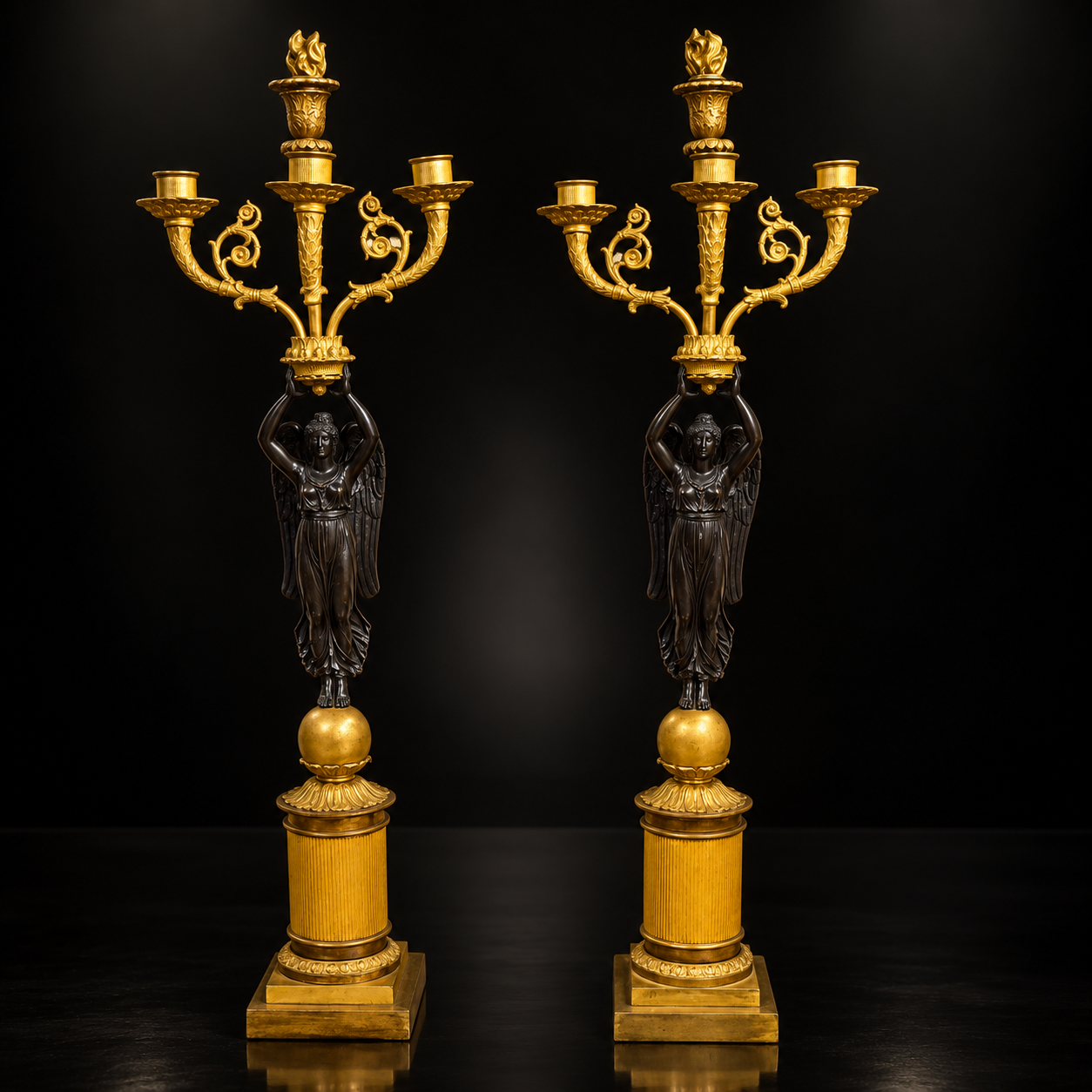 Image 1 of 16
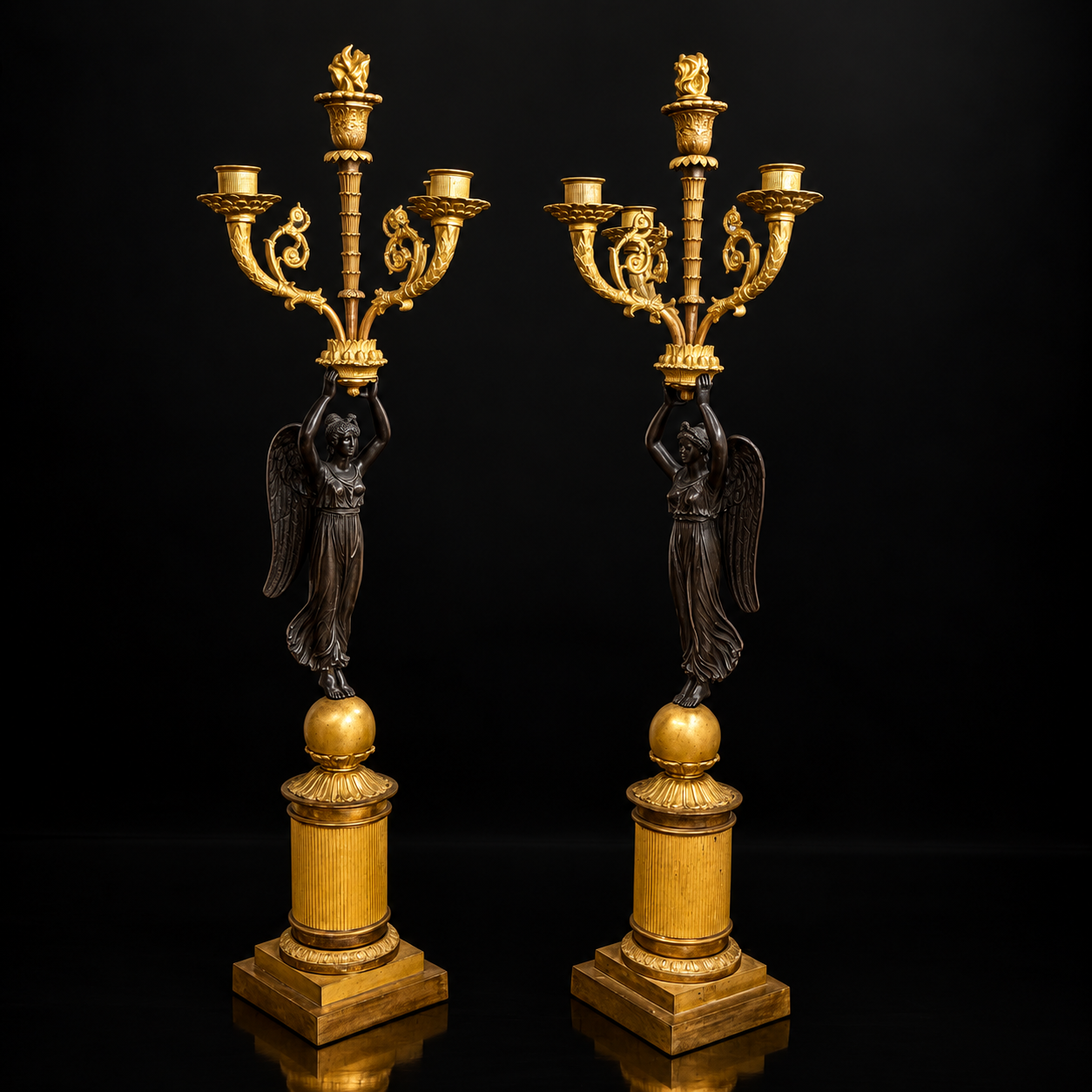 Image 2 of 16
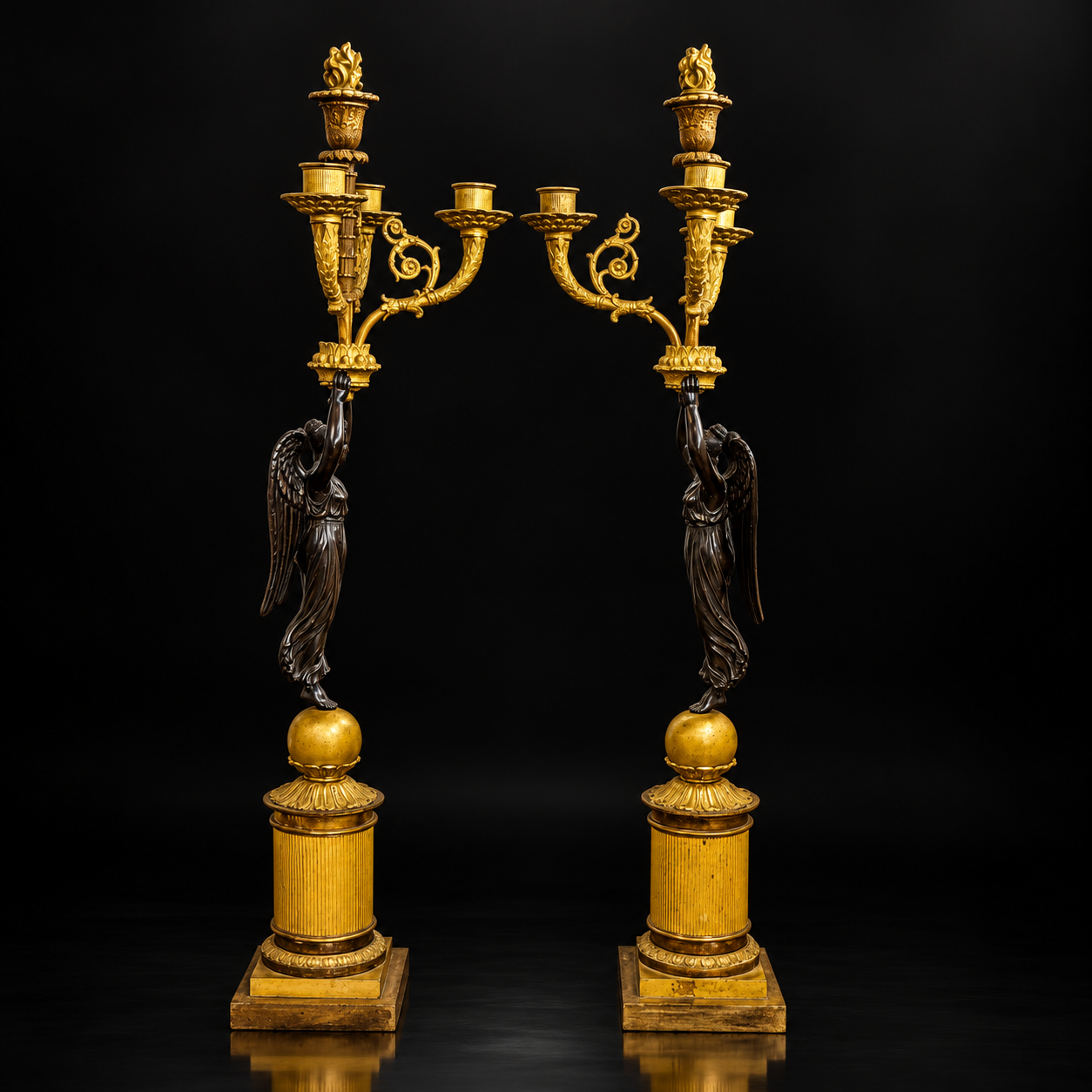 Image 3 of 16
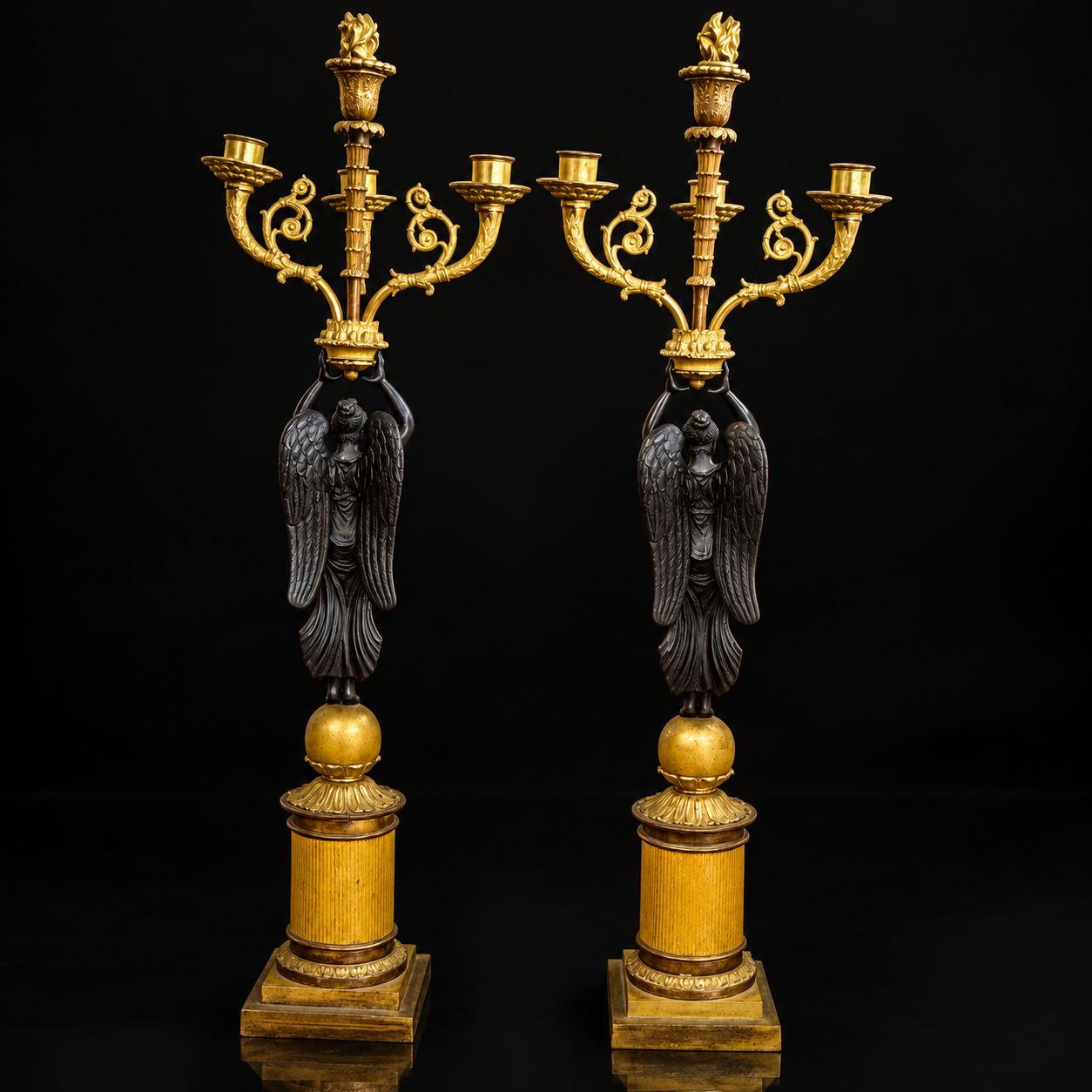 Image 4 of 16
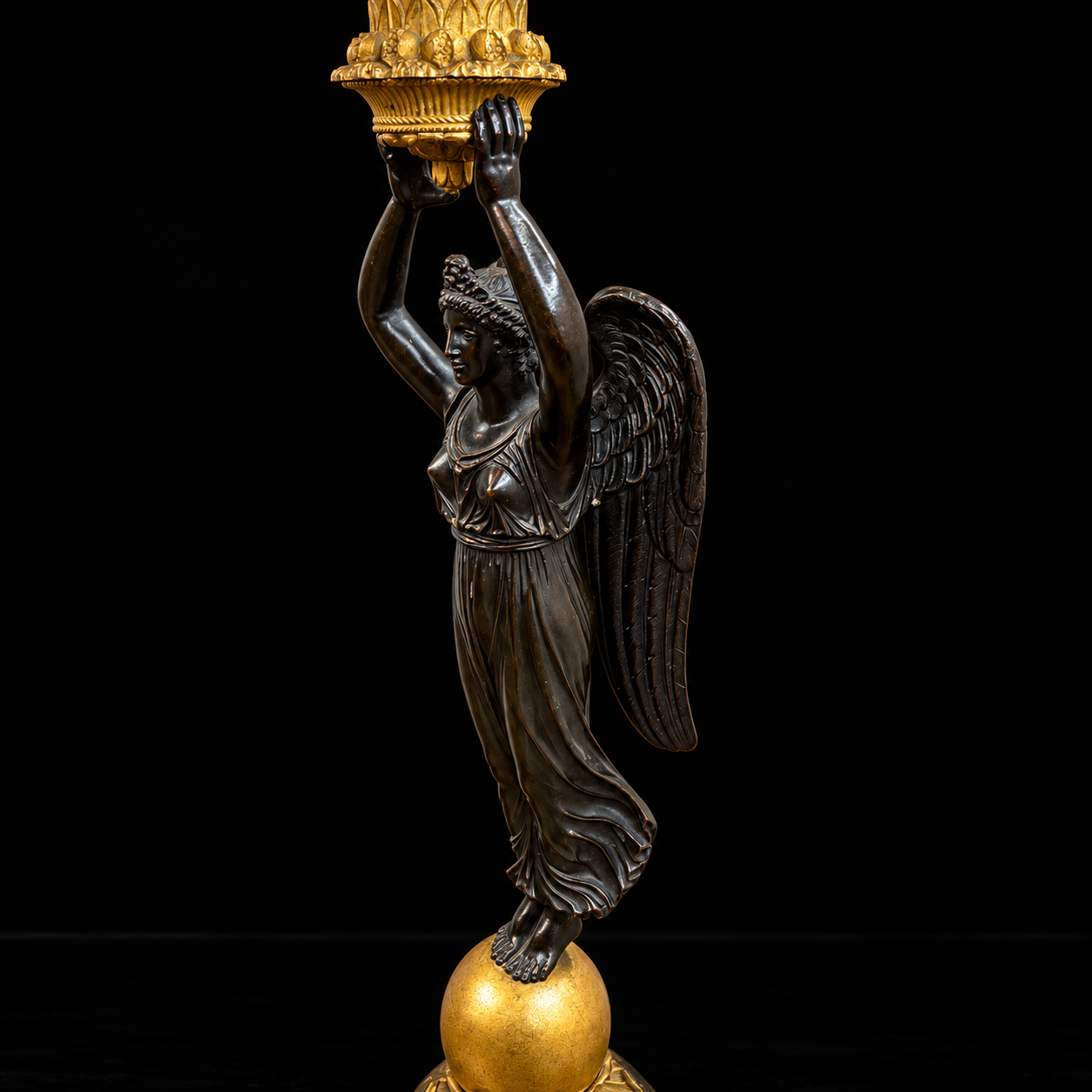 Image 5 of 16
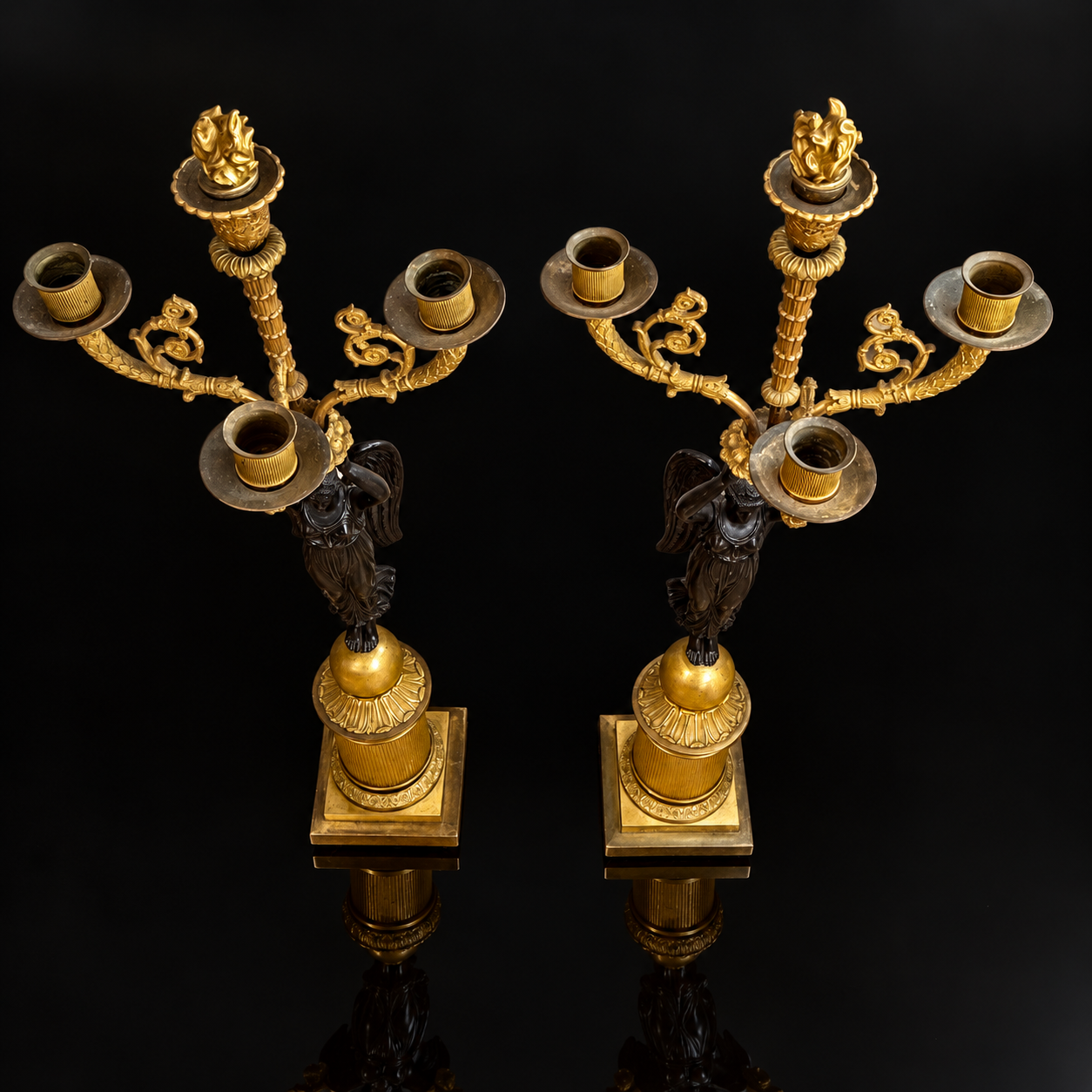 Image 6 of 16
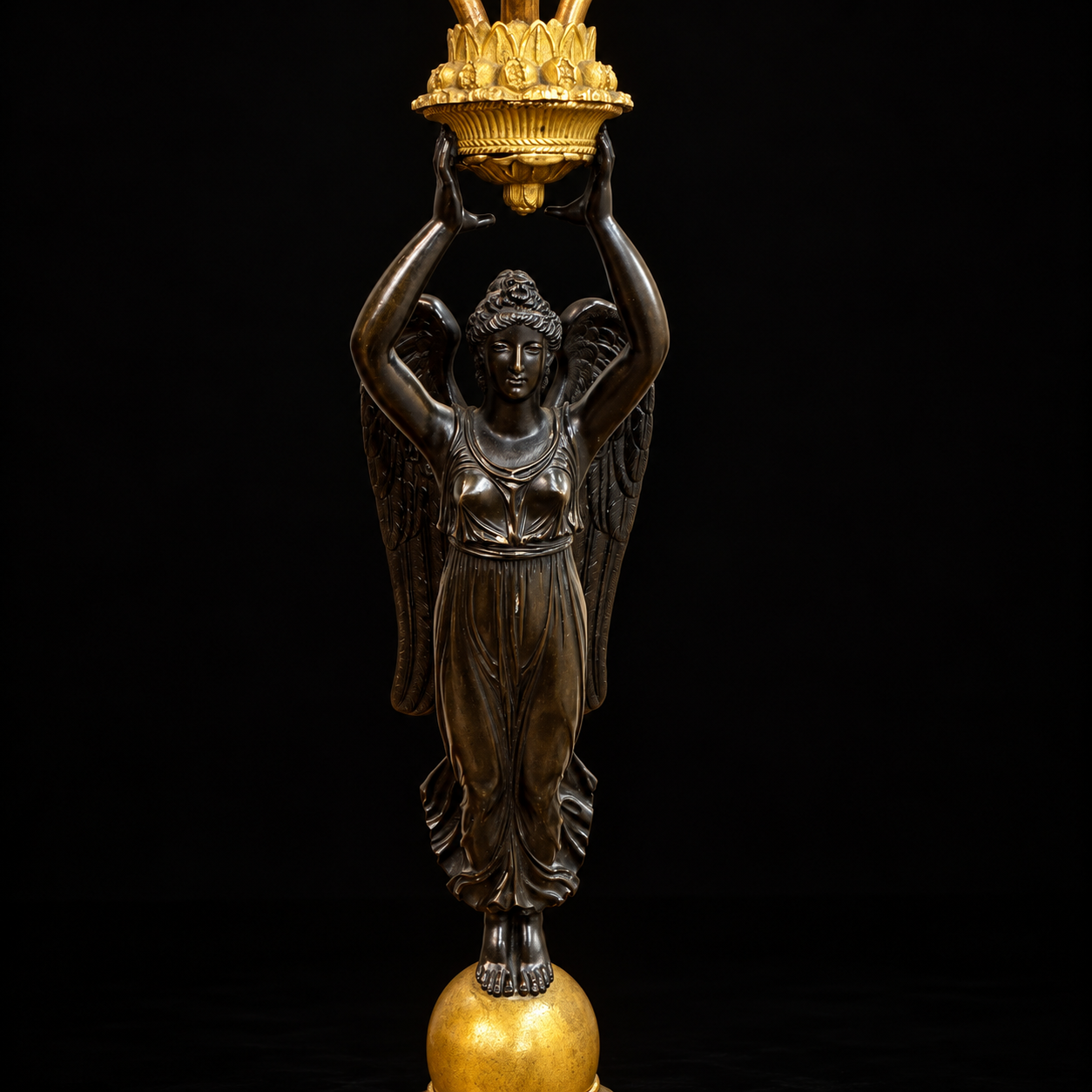 Image 7 of 16
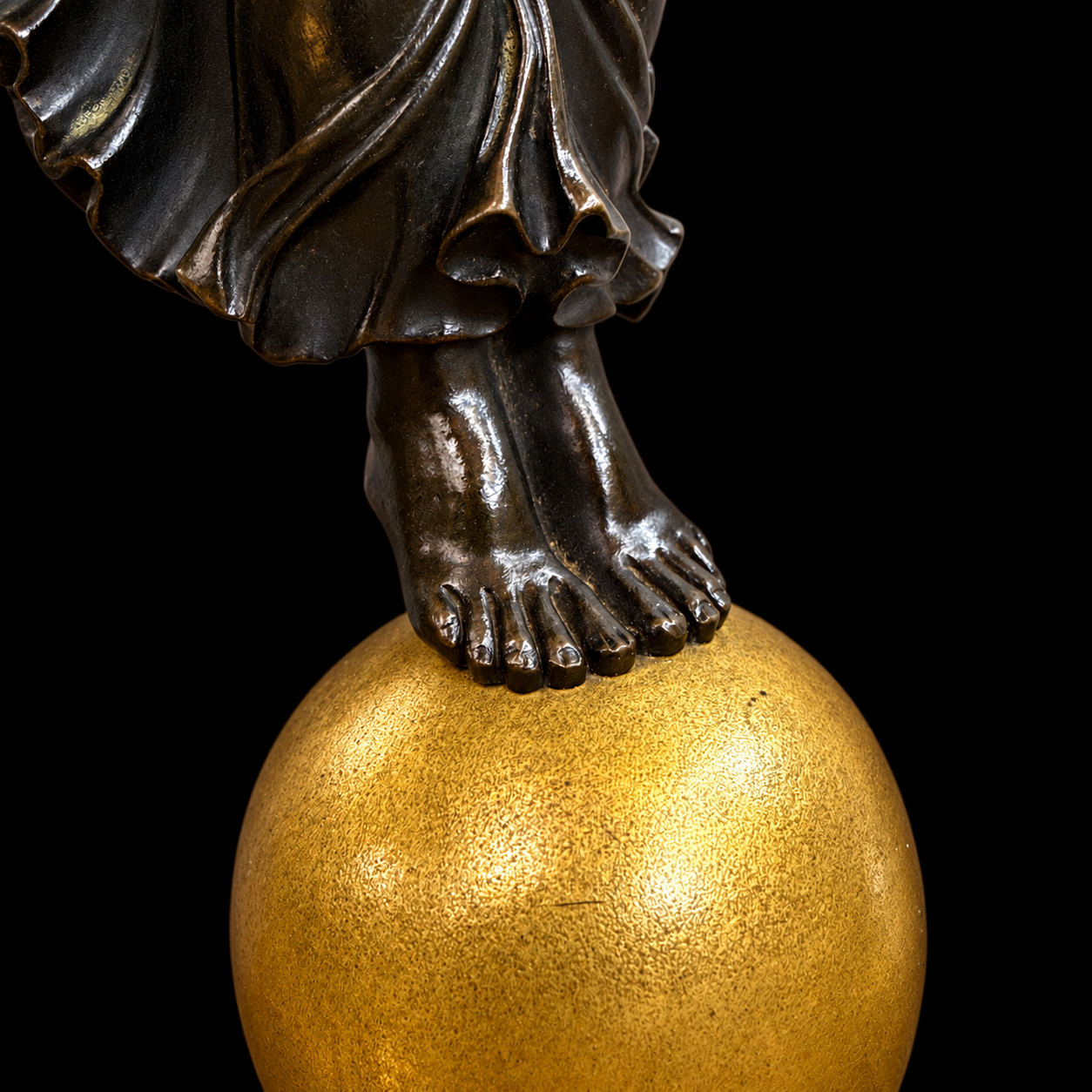 Image 8 of 16
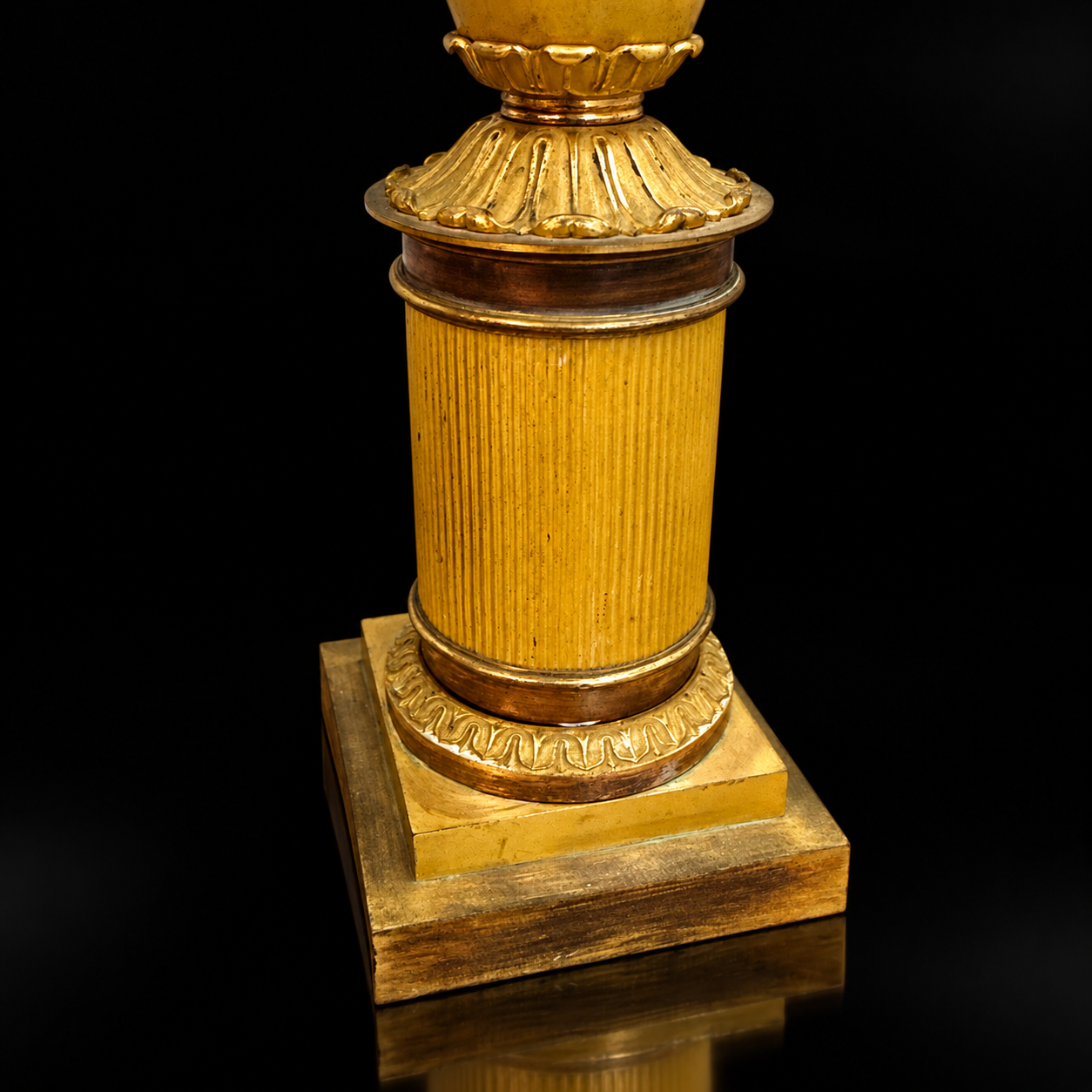 Image 9 of 16
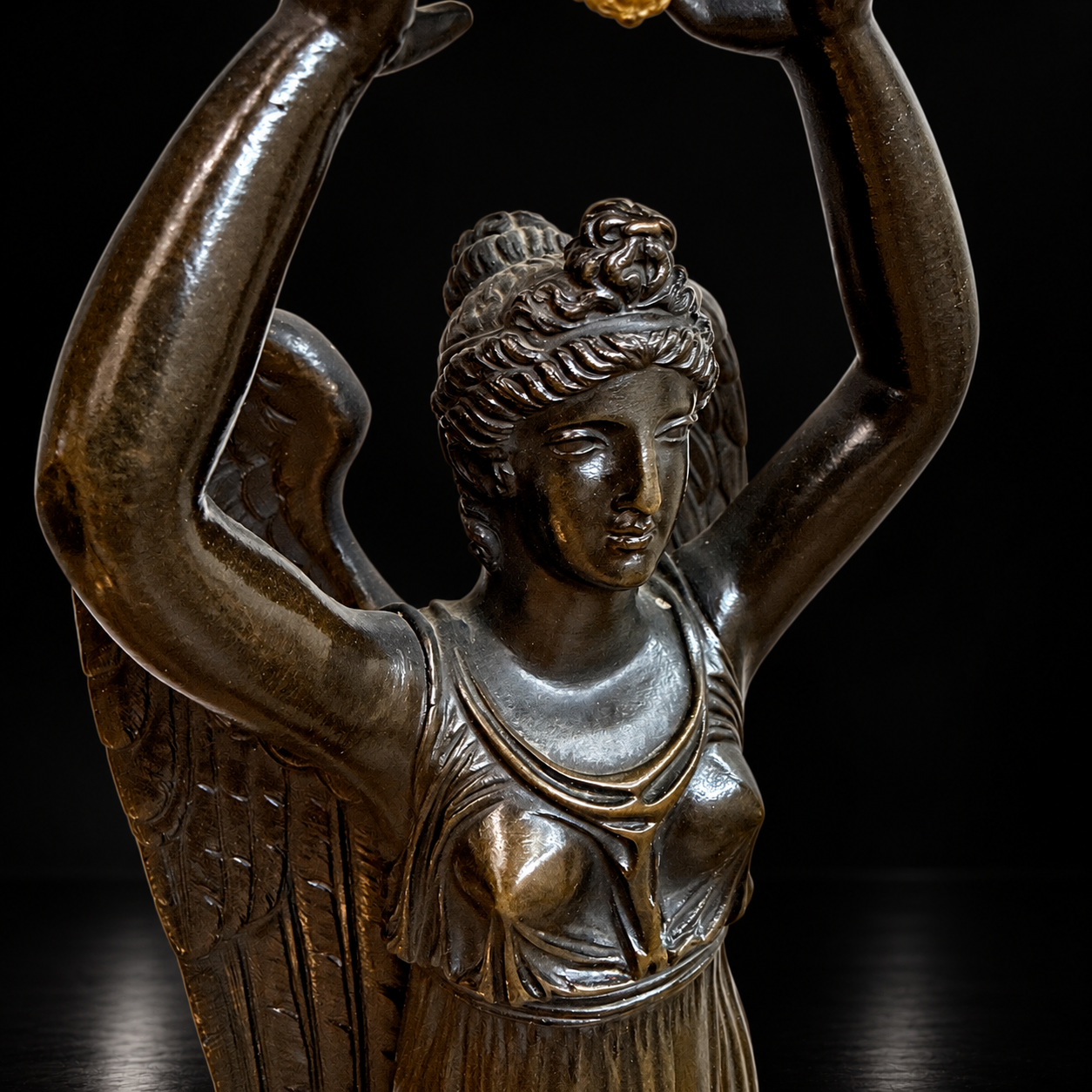 Image 10 of 16
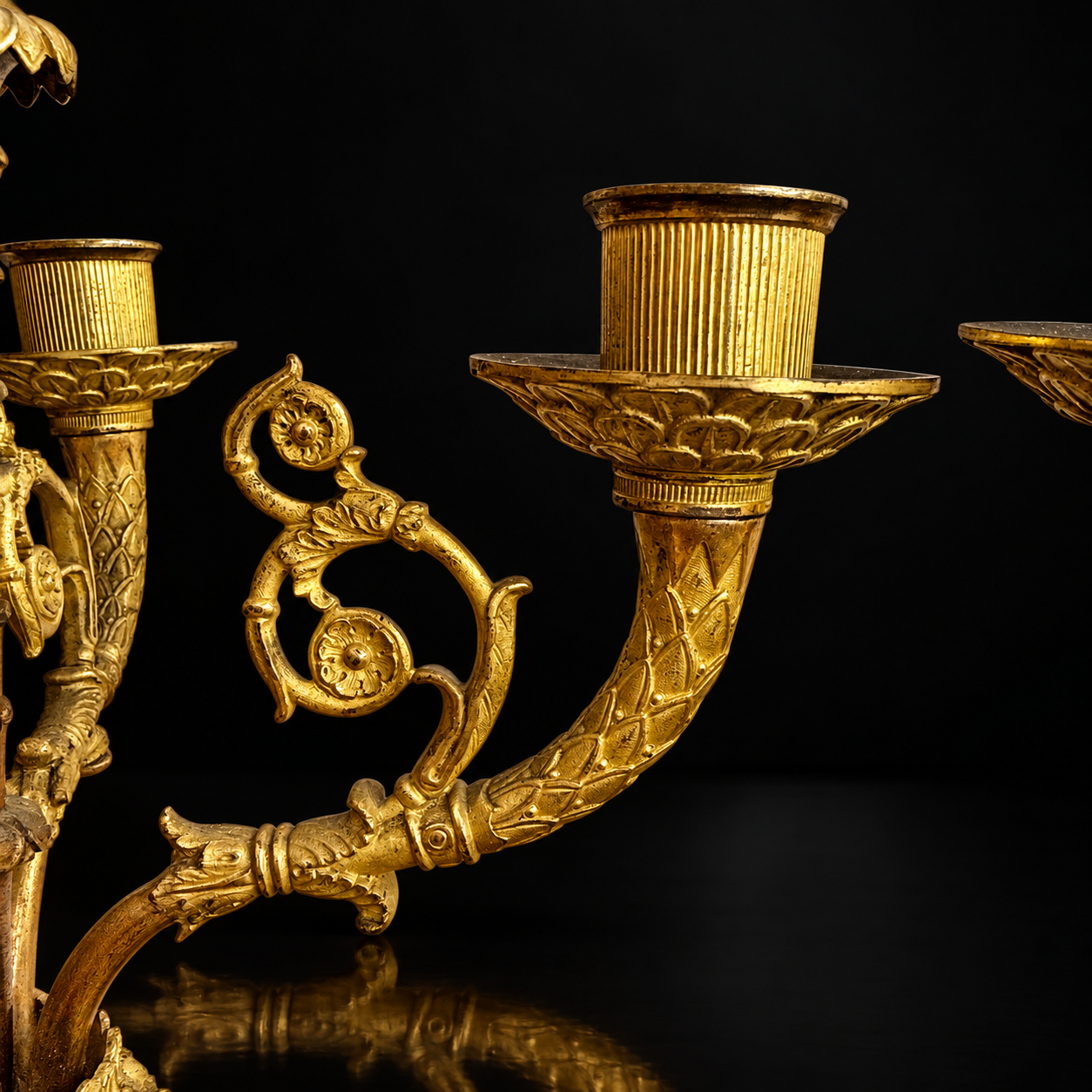 Image 11 of 16
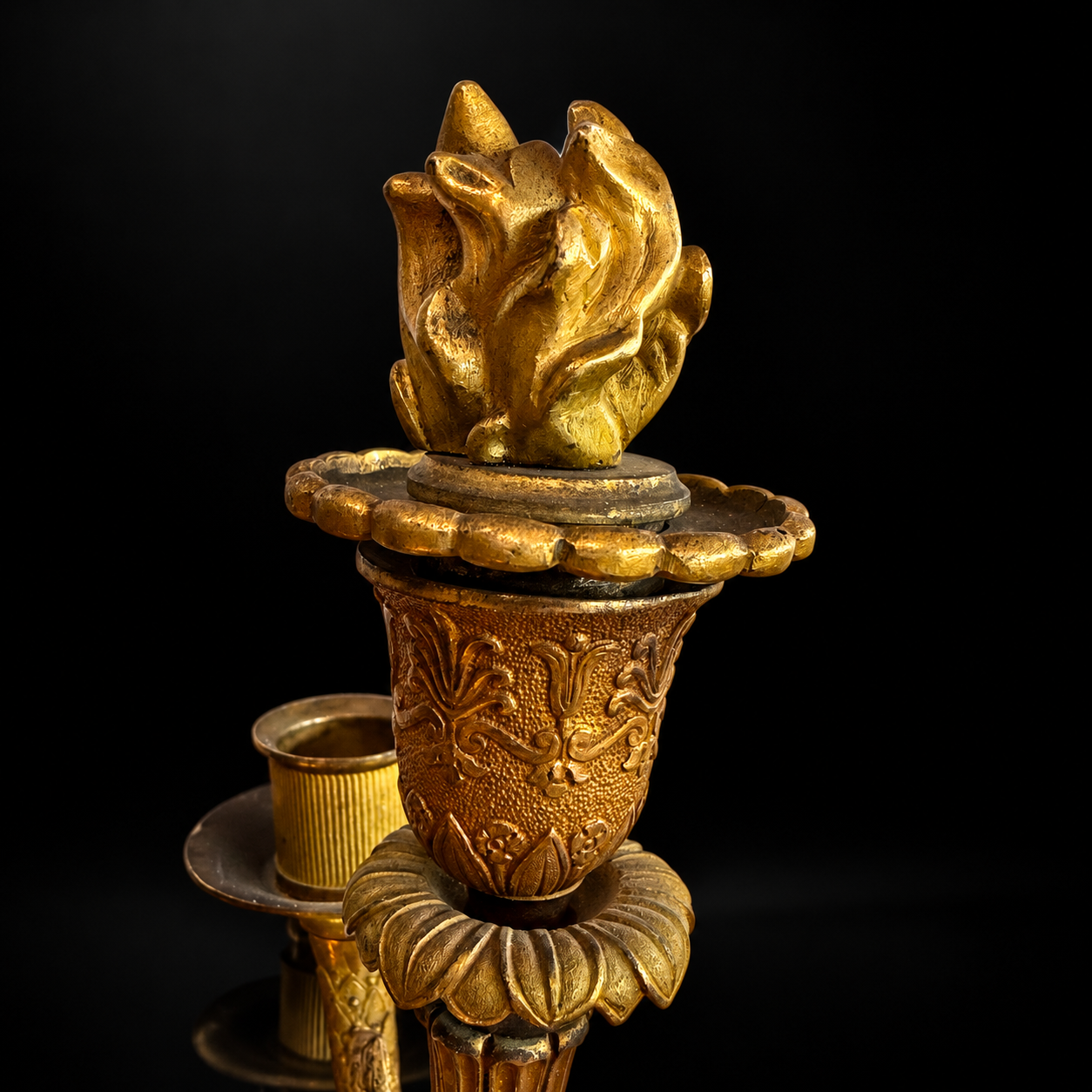 Image 12 of 16
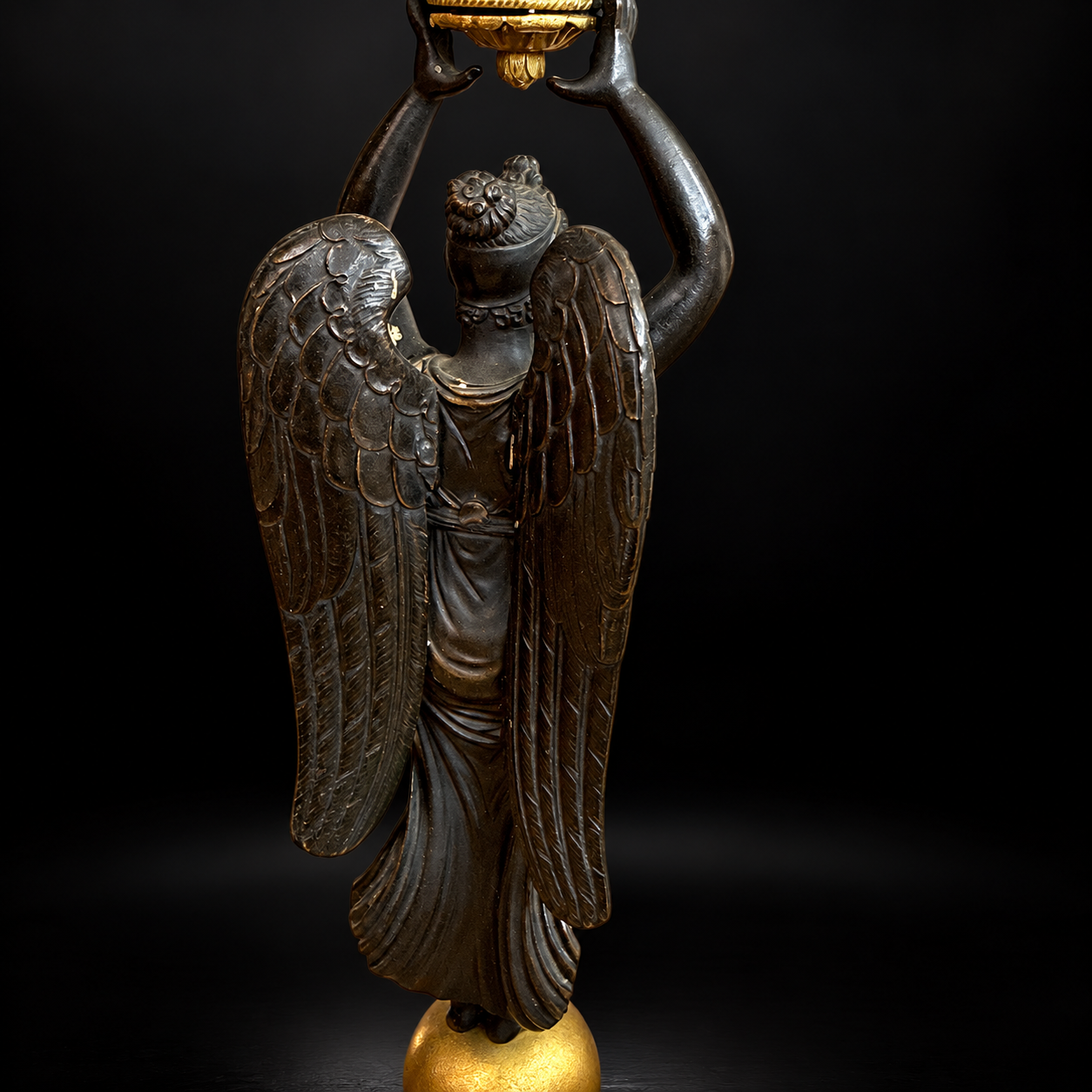 Image 13 of 16
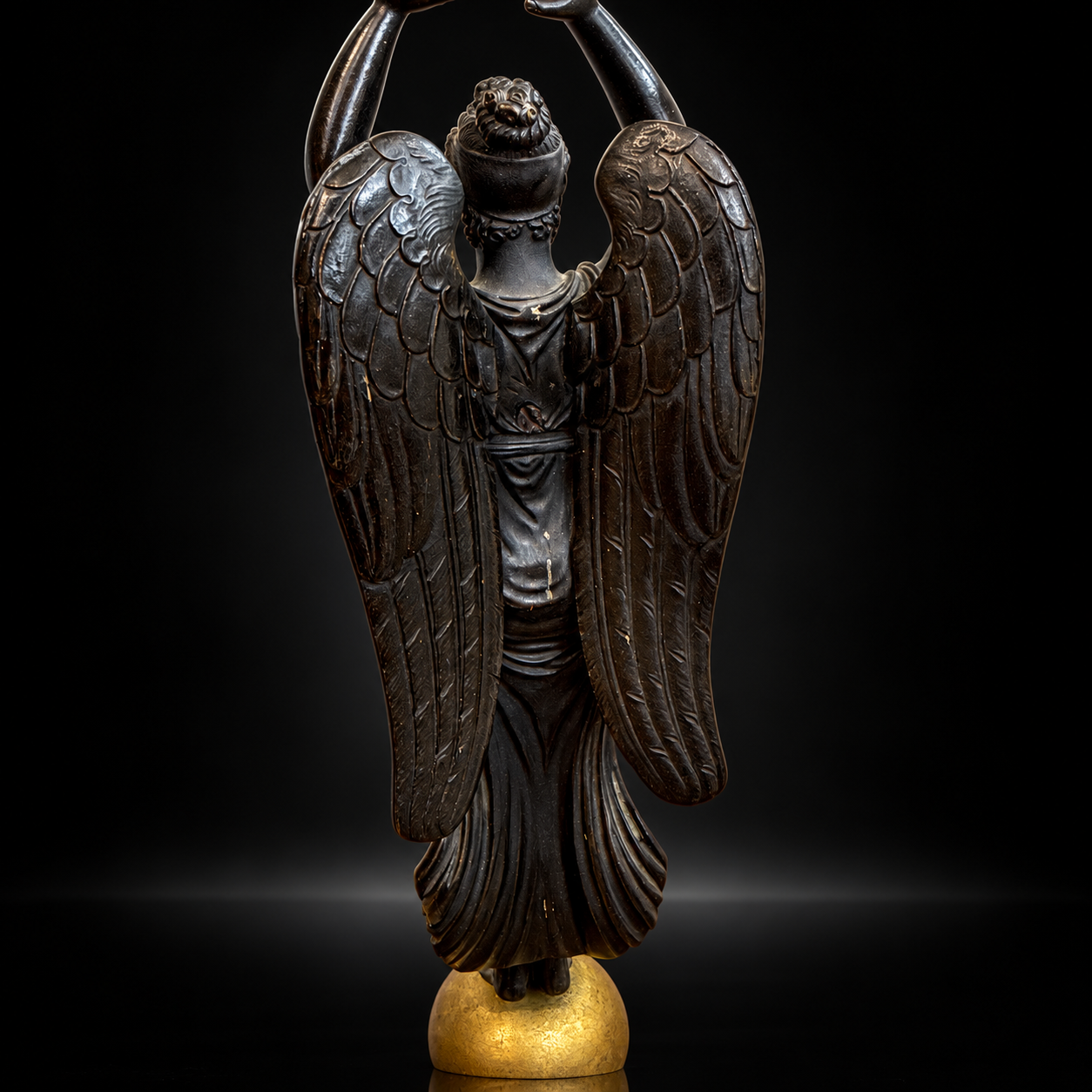 Image 14 of 16
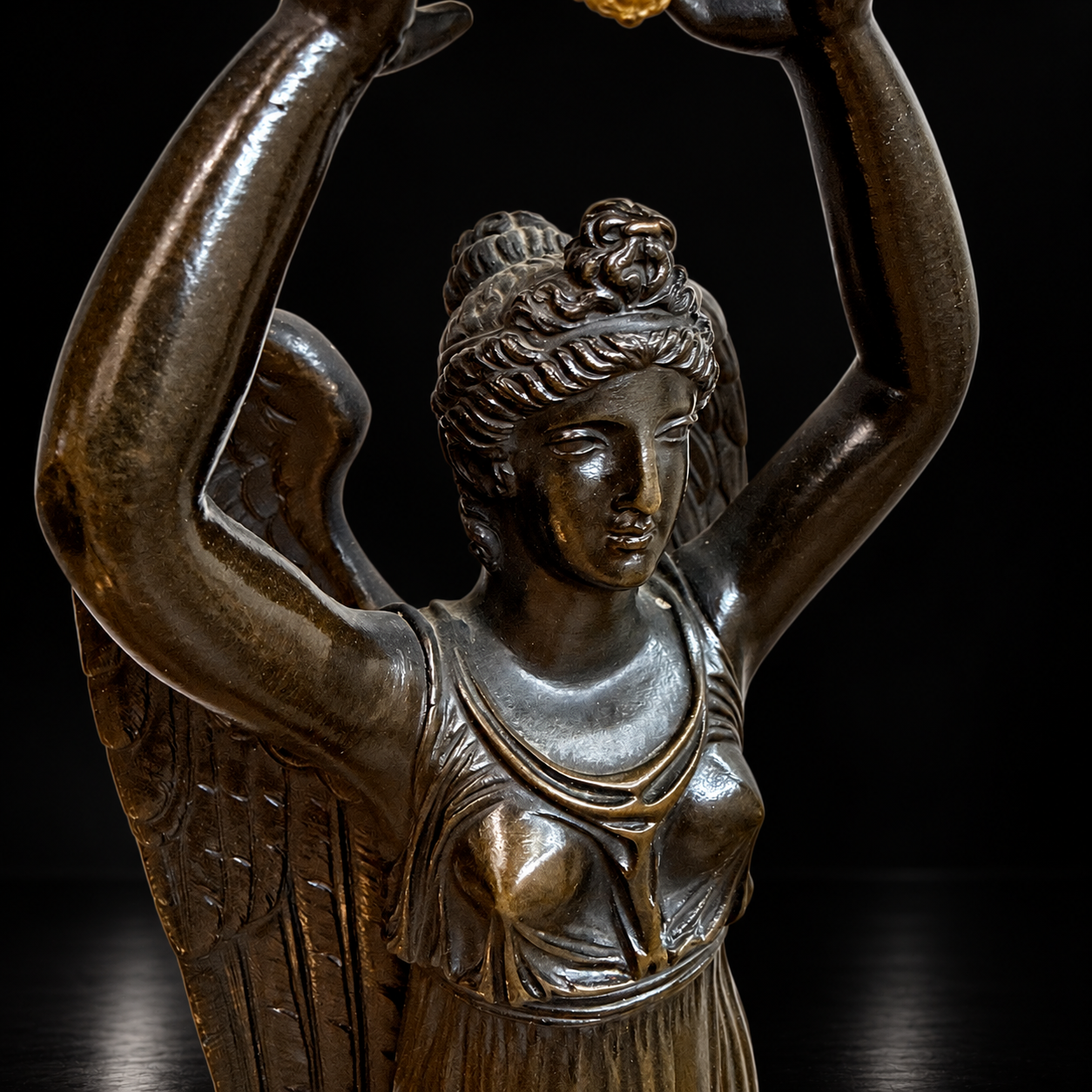 Image 15 of 16
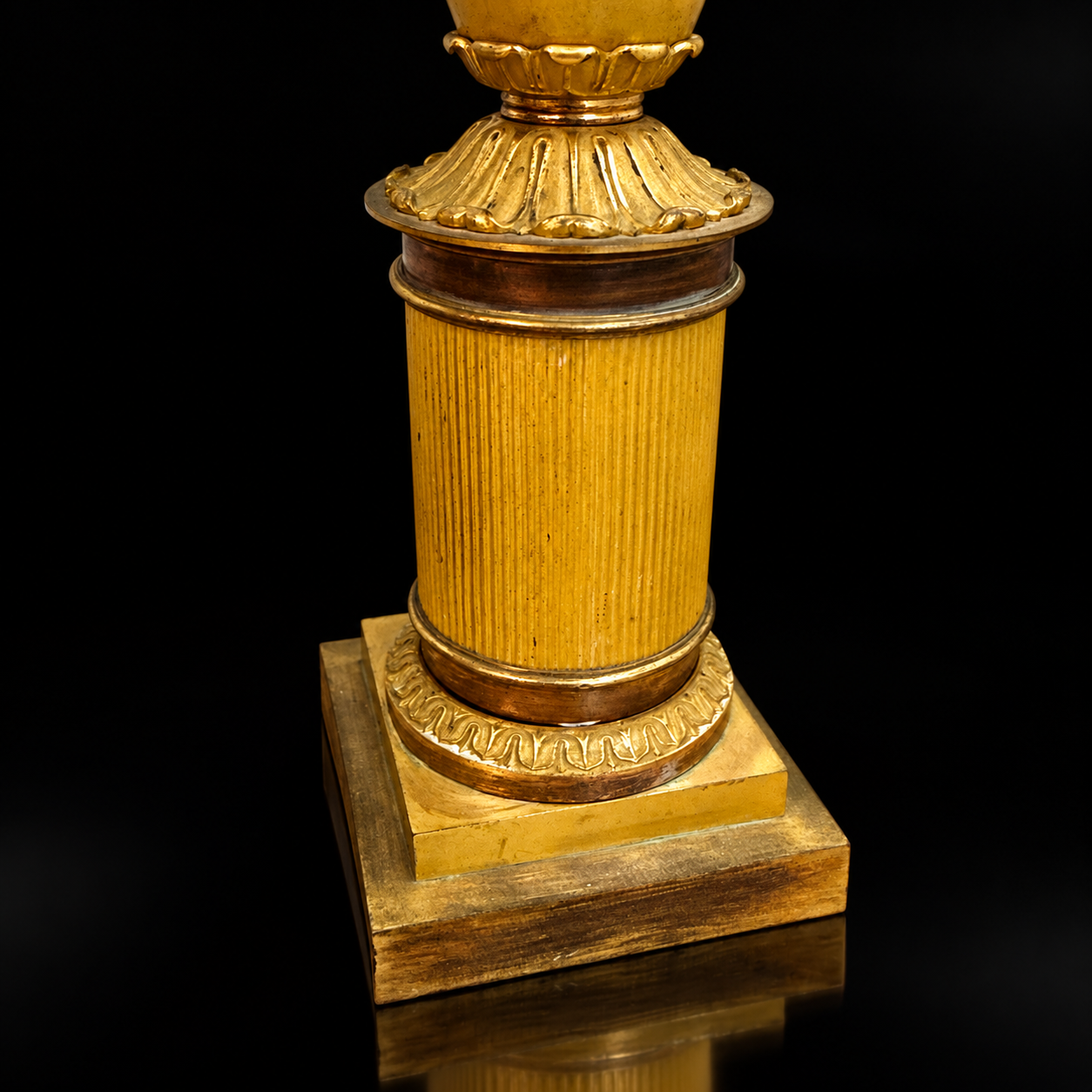 Image 16 of 16